How can robotic technology help solve real challenges in the waste and recycling industry?
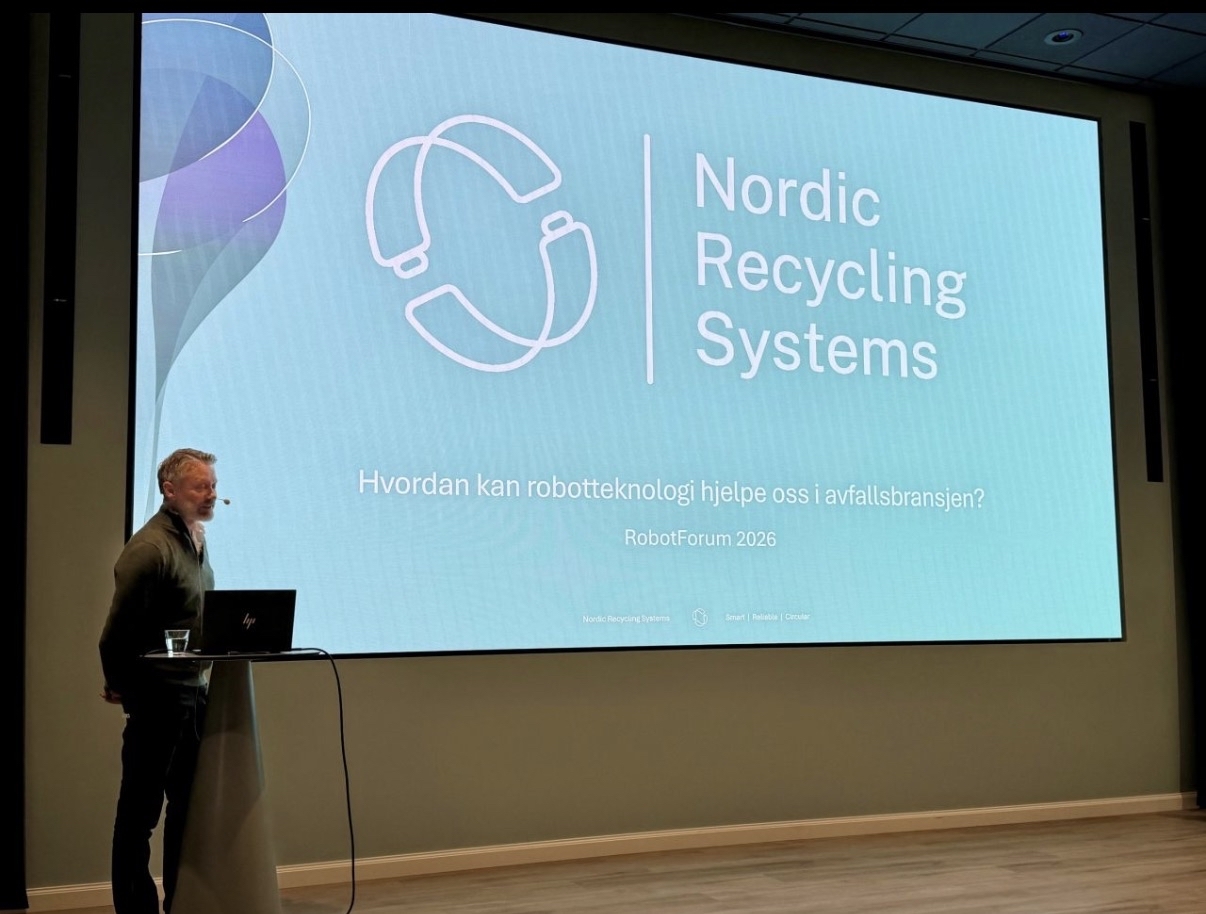
This was the question addressed by Nils Aulie, Managing Director of Nordic Recycling Systems, during his presentation at RobotForum 2026.
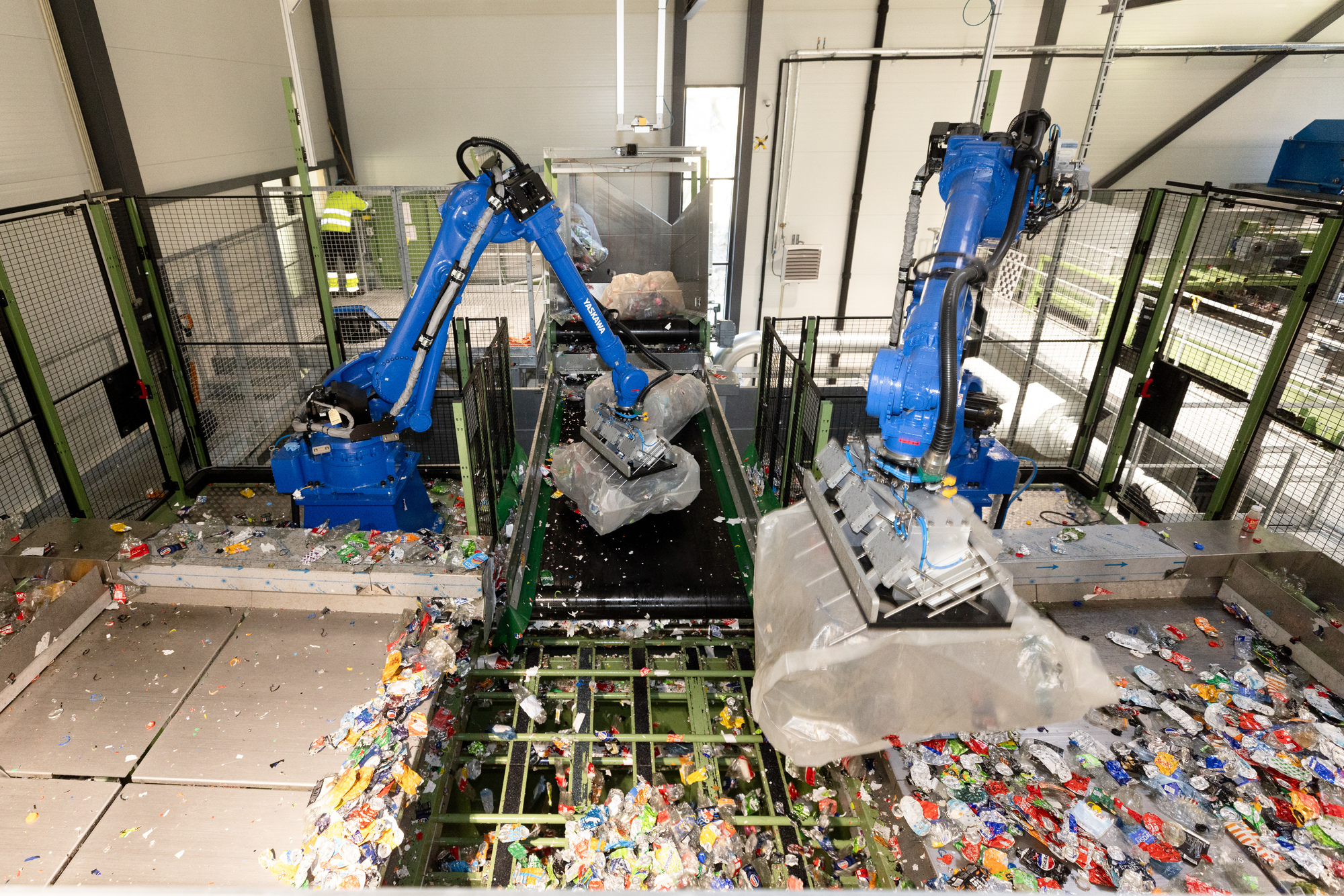
Rather than looking at the robot as a standalone machine, NRS presented a practical development journey — starting with a material-handling challenge and resulting in a fully integrated robotic bag-opening process.
A process that needed a better solution
The original process used mechanical equipment to open bags before the material was discharged onto a walking floor and transported into the sorting plant.
In operation, torn bags frequently had to be removed manually. Bag material followed the beverage containers further into the sorting system, while separated bags could still contain significant quantities of valuable material.
In some cases, thousands of beverage containers had to be manually emptied from bags during the night shift.
Could robotics make the process more efficient, controlled and fully automated?
Designing the process around robotics
Several concepts and potential suppliers were evaluated. Robotics quickly emerged as a highly relevant technology for full integration into NRS sorting systems.
Together with Skala Robotech, NRS began developing a fully integrated robotic bag-opening solution specifically for the recycling industry.
The objective was not simply to place a robot beside an existing process. The process itself had to be designed around robotics, vision and the behaviour of the material.
From first installation to international deployment
Trondheim
First fully automated robotic bag-opening installation for deposit-return bags.
Stavanger
Second installation incorporating lessons learned from the first system.
Fetsund
Existing infeeds retrofitted with robotic technology while the facility remained in production.
Singapore
The technology takes the next step with its first deployment in Singapore.
Robotics in real recycling environments
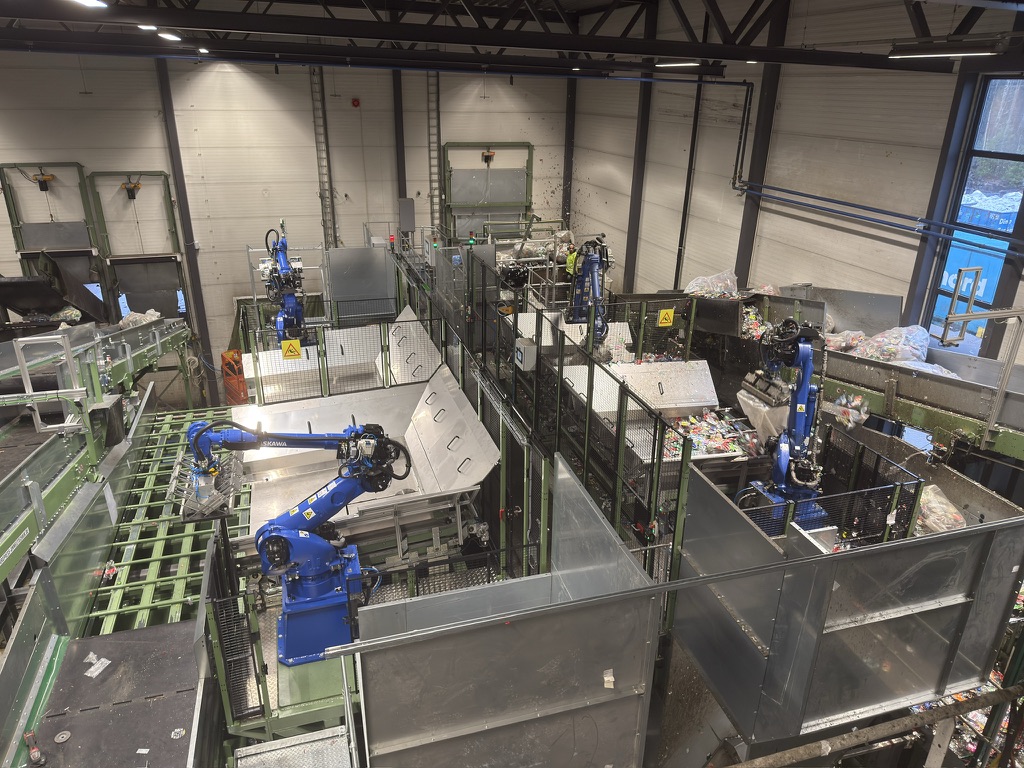
Successful robotic automation depends on far more than the robot. Material handling, machine vision, software and robot movements must operate as one integrated process.
The real challenge is understanding the material
The development proved considerably more complex than initially expected.
Waste does not behave like a predictable industrial component. Bags can arrive open or closed, filling levels vary significantly, and material characteristics change with operating conditions and season.
Significant development work was therefore required in programming, machine vision and robot movement.
Vision
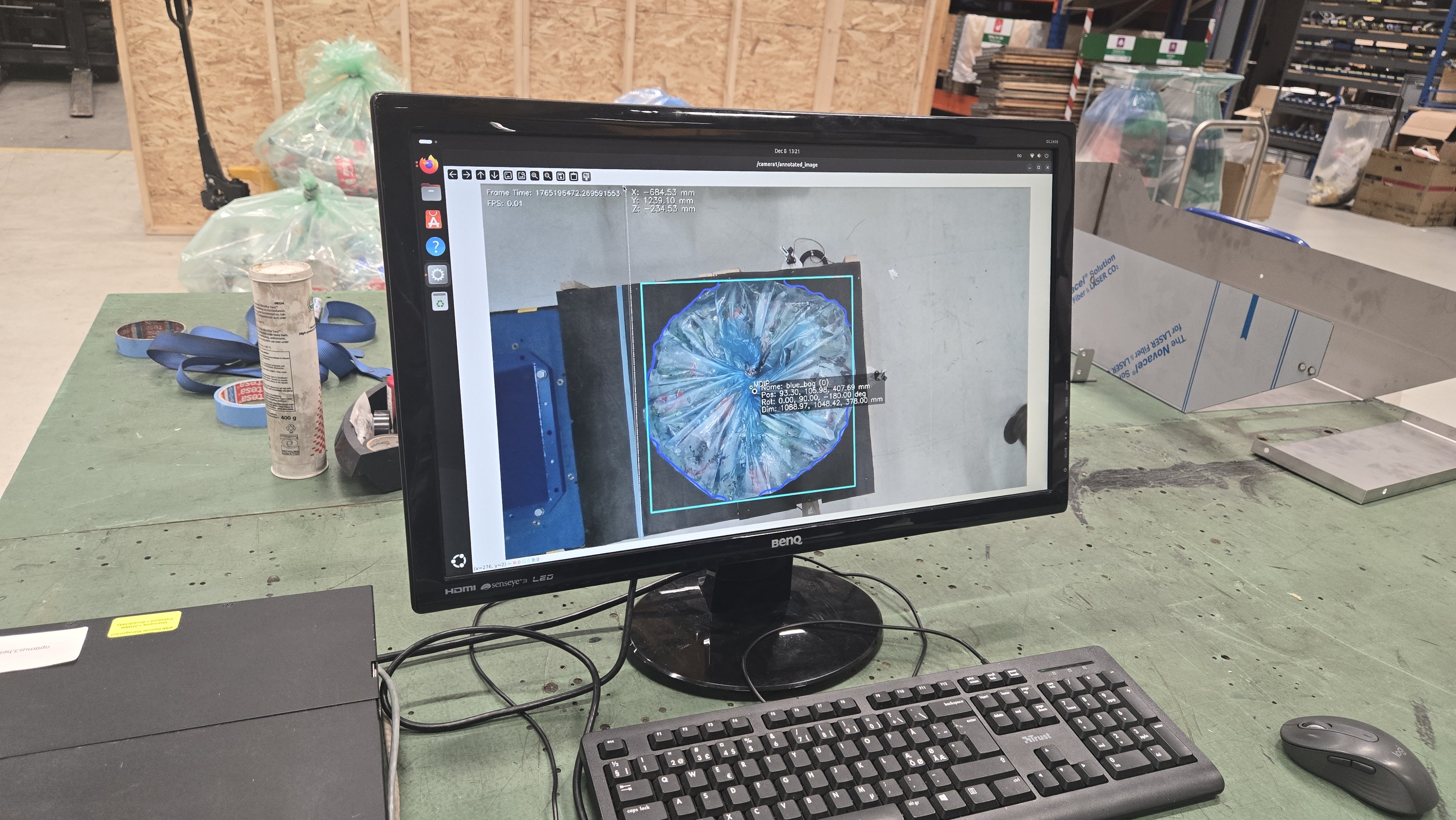
Teaching the system what to identify and pick in a continuously changing material stream.
Robot movement
Optimising movements to reduce cycle time and minimise spillage during bag emptying.
Material variability
Managing open bags, changing fill levels and unpredictable operating conditions.
Performance proven in operation
The robotic solution at Skurve currently has approximately one tonne per hour of capacity above its specified five tonnes per hour.
Turning vision into an intelligent data source
The vision platform is developing beyond simply telling the robot what to pick.
The same infrastructure can potentially provide additional information about incoming bags and material flows.
NRS is also working with the possibility of reading QR codes directly from bags, creating a cost-efficient alternative to separate RFID-based registration.
One vision platform. Multiple functions.
Technology built around the recycling process.
Nordic Recycling Systems develops automation and intelligent sorting solutions designed for real recycling operations.
Could robotics improve your recycling process?
Talk to NRS about robotics, machine vision and integrated automation.